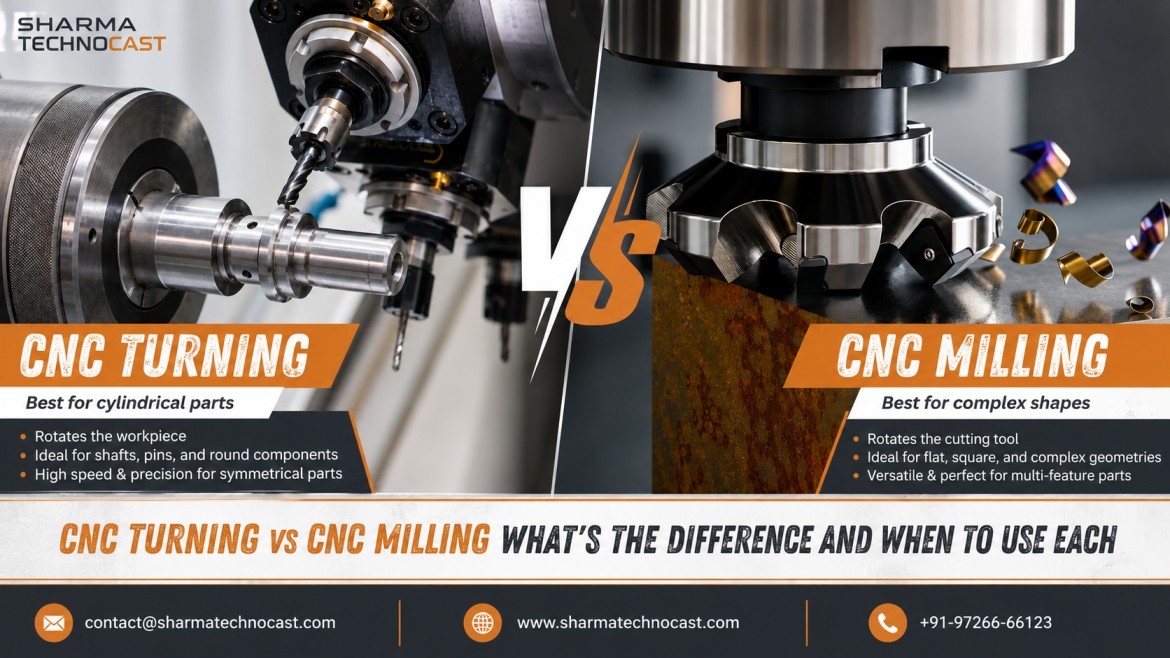

For example, drive shafts, rollers, threaded connectors, and bearing sleeves are commonly produced using equipment designed for rotational work. These components require consistent diameters, smooth surface finishes, and accurate concentricity to perform reliably in service. Other components, such as mounting plates, valve bodies, housings, brackets, and tooling parts, require multiple surfaces and detailed features to be machined on different faces. These designs often involve pockets, drilled holes, channels, and complex contours that cannot be created through rotational operations alone. The choice of manufacturing method is usually determined during the design stage. Factors such as material grade, dimensional requirements, production volume, assembly fit, and operating conditions all influence how a component is produced. Selecting the right process helps reduce production costs while maintaining the required quality standards. Across industries such as heavy equipment, energy, transportation, process plants, and industrial machinery, machining remains one of the most important manufacturing technologies for producing accurate and reliable metal components.