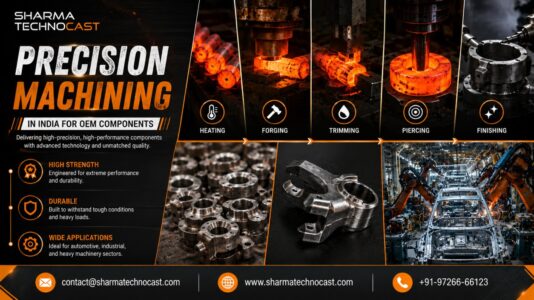
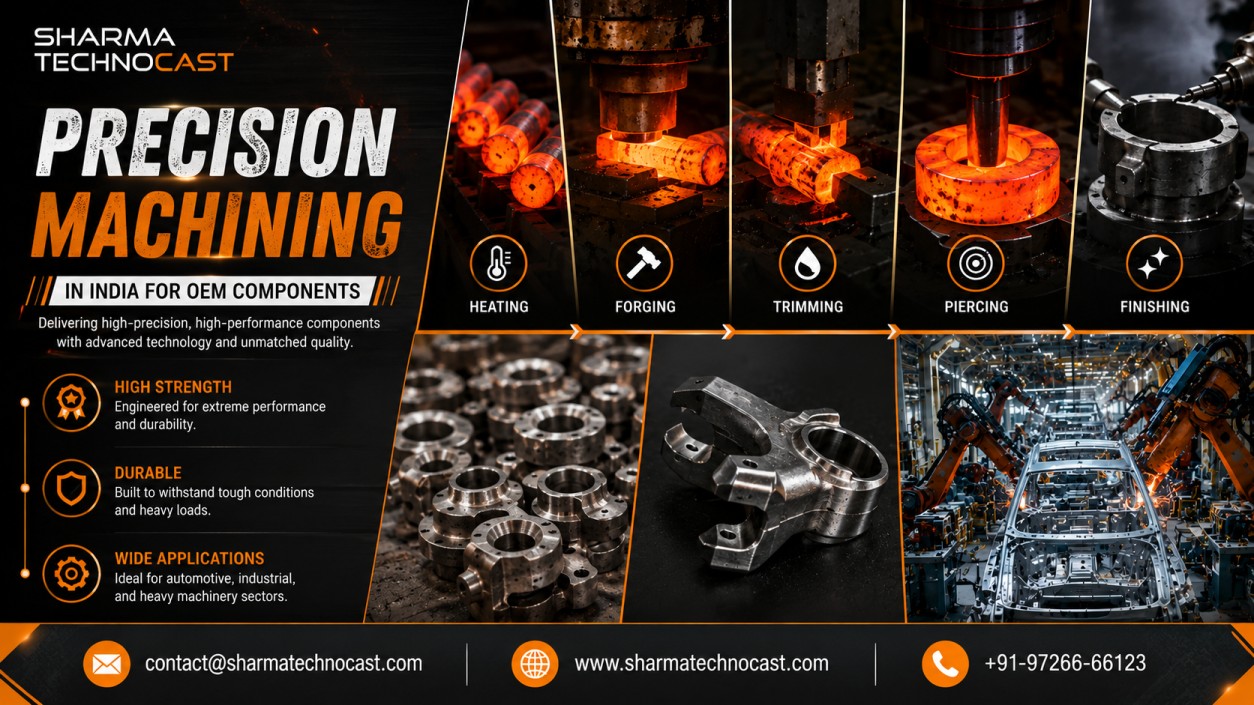

Most people who buy forged components have a reasonable idea of what forging is — metal gets heated and hit until it’s the right shape. What’s less commonly understood is why that process produces a fundamentally different part than casting or machining from bar, and why that difference actually matters once the component is in service. The forging process works the metal rather than simply filling a mold with it or cutting it down from a larger piece. That working — the progressive deformation under compressive force at elevated temperature — refines the grain structure of the steel and aligns it along the part geometry rather than leaving it random or interrupted by porosity. A forged shaft isn’t just shaped like a shaft; its internal grain structure runs along the shaft axis in a way that directly improves fatigue resistance and impact toughness compared to the same geometry machined from bar stock. Sharma Technocast runs open die, closed die, and roll forging processes across carbon steel, alloy steel, and stainless steel for OEM and industrial applications. Understanding which process suits which component type, and what actually happens during forging, helps buyers make better decisions when specifying forged components for demanding applications. For forging requirements and drawings, contact Sharma Technocast directly. https://www.sharmatechnocast.com/forging/ contact@sharmatechnocast.com +91 9726666123