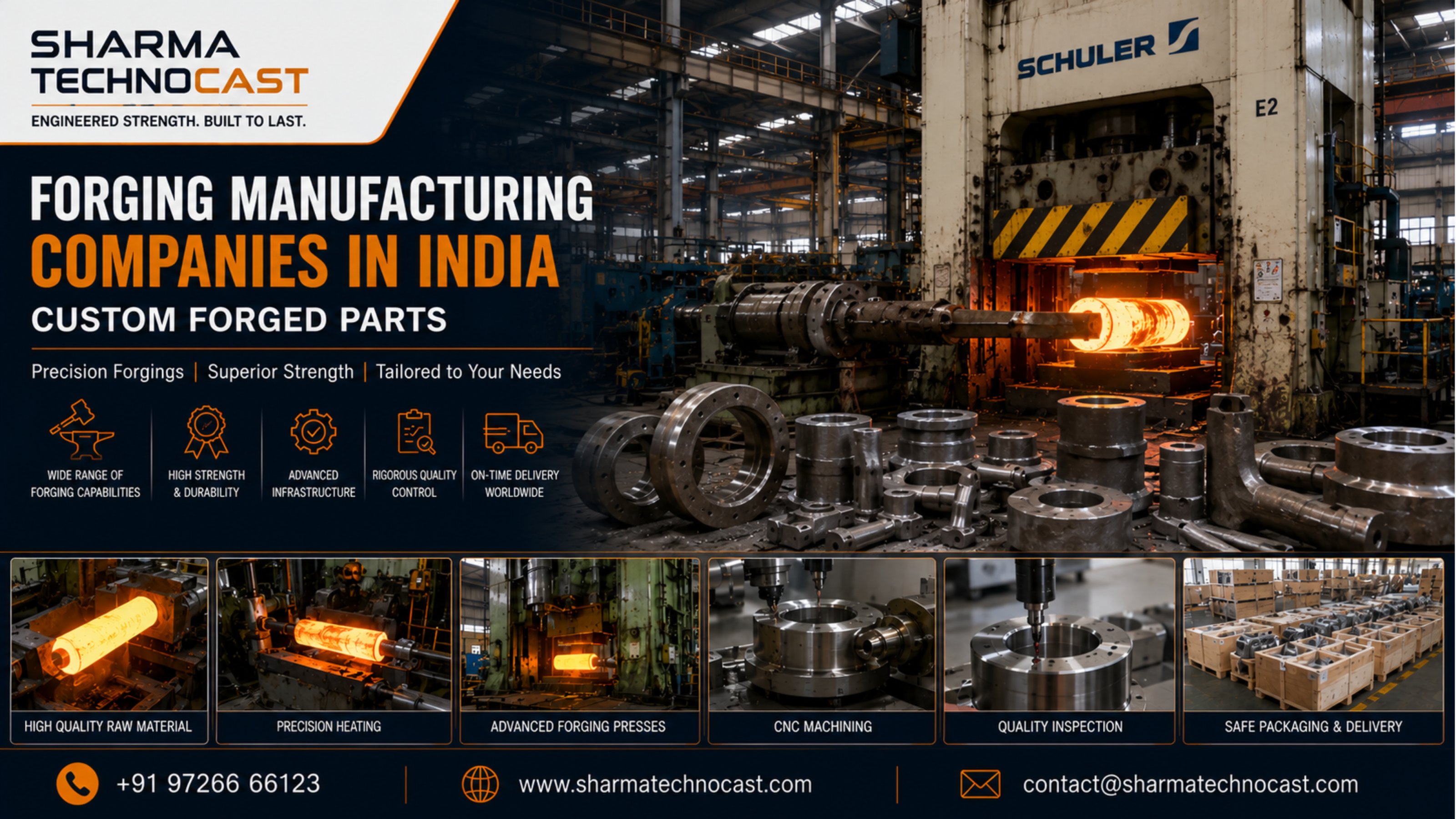

There’s no shortage of forging manufacturing companies in India — the harder part is telling which ones can actually hold a tolerance across a thousand-piece batch versus a one-off sample. Most buyers find out the difference the expensive way, after the first production run comes back inconsistent. Sharma Technocast forges in open die, closed die, and roll forging, which matters because not every part suits the same process — a heavy structural shaft needs different handling than a tapered axle or a high-volume bracket. Carbon steel, alloy steel, and stainless steel are all in regular rotation here, each forged at the right temperature and heat treated to the property spec the drawing actually calls for, not a generic default. Where it gets useful for OEMs is afterward — once a part is forged, it often still needs machining to land on final dimensions. That’s done in-house too, along with casting and fabrication if a project happens to need a mix of processes. One supplier, one quality trail, instead of juggling three.