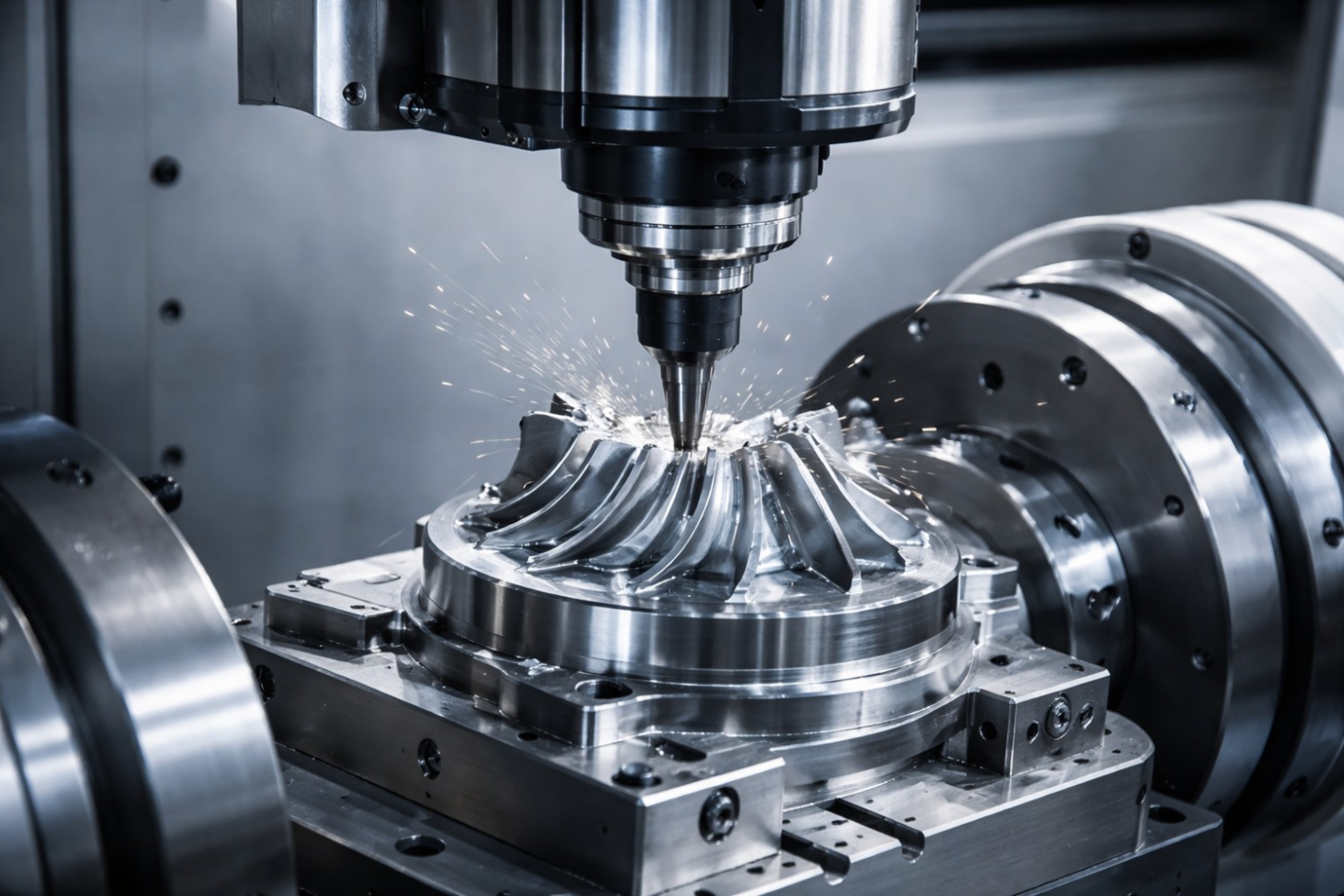

Conventional CNC machines operate on three linear axes — X, Y, and Z. While effective for simple components, these systems often require multiple setups to complete intricate parts. Each repositioning increases cycle time and introduces potential alignment errors. 5-axis CNC machining enhances this process by adding two rotational axes. These additional axes allow either the cutting tool or the workpiece to tilt and rotate during operation. The result is full access to complex geometries in a single setup. This capability allows manufacturers to: Machine intricate surfaces seamlessly Reduce part handling Improve dimensional consistency Shorten production cycles It is a technological advancement designed specifically for today’s high-precision engineering requirements.